
The Role of Cannabis in Modern Medicine: What Science Says
The ties that bind man to foodstuffs spiked with cannabis is as ancient as man’s civilization itself — a ritual of taste and change from the sacred Indian bhang lassi through the fathering of brownies of the present day. Today, the edible varieties of the cannabis plant have changed from myth and folklore to a scientific process of controlled euphoria, dancing between gastronomy and pharmacology. If the popularity of cannabis edibles lends itself to full acceptance, few have been made aware of the manner in which they operate in the human body when met with their own unmistakable individuality, nor why the results obtained are so different from those resulting in the inhalation of cannabis. Today Preston cannabis club blog tells more about edibles.

- How Cannabis Edibles Work
It is well known that when cannabis is smoked or vaporized (the quickest way), the THC immediately is passed from the lungs to the circulation, and a high is experienced almost immediately. Edible cannabis, however, presents an entirely different metabolic pathway:
- Ingestion and digestion — THC passes through the stomach and the small intestine.
- The system absorbs it into the blood stream.
- Dosage and Individual Response
Unlike smoking, where you can sense your limits in real time, edibles demand patience and precision.
Even a seemingly harmless dose can lead to an unexpectedly intense experience if underestimated.
Experience Level | Recommended THC Dose | Expected Duration |
Beginner | 2–5 mg | 4–6 hours |
Intermediate | 5–10 mg | 6–8 hours |
Experienced | 10–20 mg+ | 8–10 hours |
⚠️ Pro Tip: Always start low and increase gradually. The golden rule: you can eat more later, but you can’t eat less once it’s too late.
- Types of Cannabis Edibles
Cannabis edibles come in many forms; however, they all have one thing in common: a cannabis-based product was added to something you could eat (and drink).
These edible products vary greatly, including:
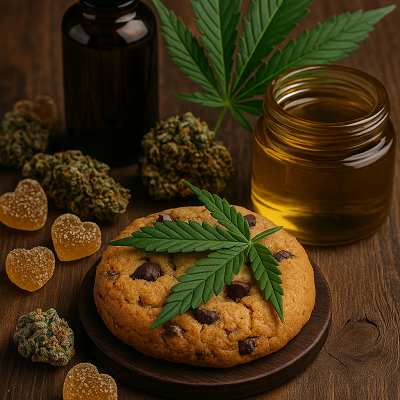
- Baked Goods: Most commonly brownies, cookies and other sweet baked goods made with cannabutter or cannabis oil.
- Gummies & Candies: Ingested through gummy bears, candies, etc., great for precision dosing, small size and discretion.
- Beverages: Tea, coffee, seltzer water and other beverages that are made with water soluble cannabinoids.
- Savory Snacks: Such as popcorn, chips and sauces to create different flavors and to expand your palate.
Each edible will absorb at a different rate based on how much fat is contained within the product, the specific strain of cannabis used and how it was produced.
- The effects of consuming an edible
The effects of consuming an edible may be described as having a deep, physical sensation while also being mentally stimulating and very sensory. Some users report that their senses seem to become heightened, that they feel a sense of calmness or peace, and that they are able to focus on one thing at a time (often referred to as “time distortion”). However, some users also describe these same effects as overwhelming, especially if they are new to using cannabis products.
A user’s ability to control the effects of consuming an edible is directly related to the user’s set and setting when they consume the edible. Set refers to the user’s mental state at the time of consumption (i.e. relaxed, anxious), and setting refers to the environment in which the edible is consumed (i.e. comfortable, stressful).
Consuming an edible is an act of surrender to the process of cannabis becoming absorbed into our body; the chemical reaction takes time, and the user must allow themselves to fully immerse in this process. With each bite taken, the user is given an opportunity to nourish their body and to tell a story about their experience. Waiting for the effects to take place and wondering what will happen next creates a narrative, a journey of discovery that invites the user to savor every moment.
With the rise of legalization and improvement in cannabis products, edible products are no longer just for indulgence purposes, but rather, they are becoming a means for people to express themselves creatively, to find wellness and to discover themselves. Good experiences, like fine dining, require patience, attention and appreciation of the journey.