
Understanding Cannabis Concentrates: Types, Potency and Best Use Techniques
Cannabis concentrates have become the focus of great interest — and confusion — in today’s rapidly evolving world of cannabis culture. These are the distillations of the plant’s purest essence: thick, shiny, highly potent and unlike anything we knew before as “cannabis” — leaves and smoke — now “oil,” “crystal” and “vapor.”
What are Cannabis Concentrates?
Cannabis concentrates are the results of isolating the plant’s most important compounds (THC, CBD and aromatic terpenes) while removing all unwanted plant matter. The objective is purity — a superior cannabis experience where only the active compounds remain. There are two types of cannabis extraction methods: solvent based (butane, propane, etc.) and solventless (heat, pressure, or ice water).
Solventless extraction is used by those who prefer to extract cannabinoids without chemicals. Solventless methods produce their own unique textures — from clear glass like shatter to creamy budder, dry crumble, or golden rosin made from flower.
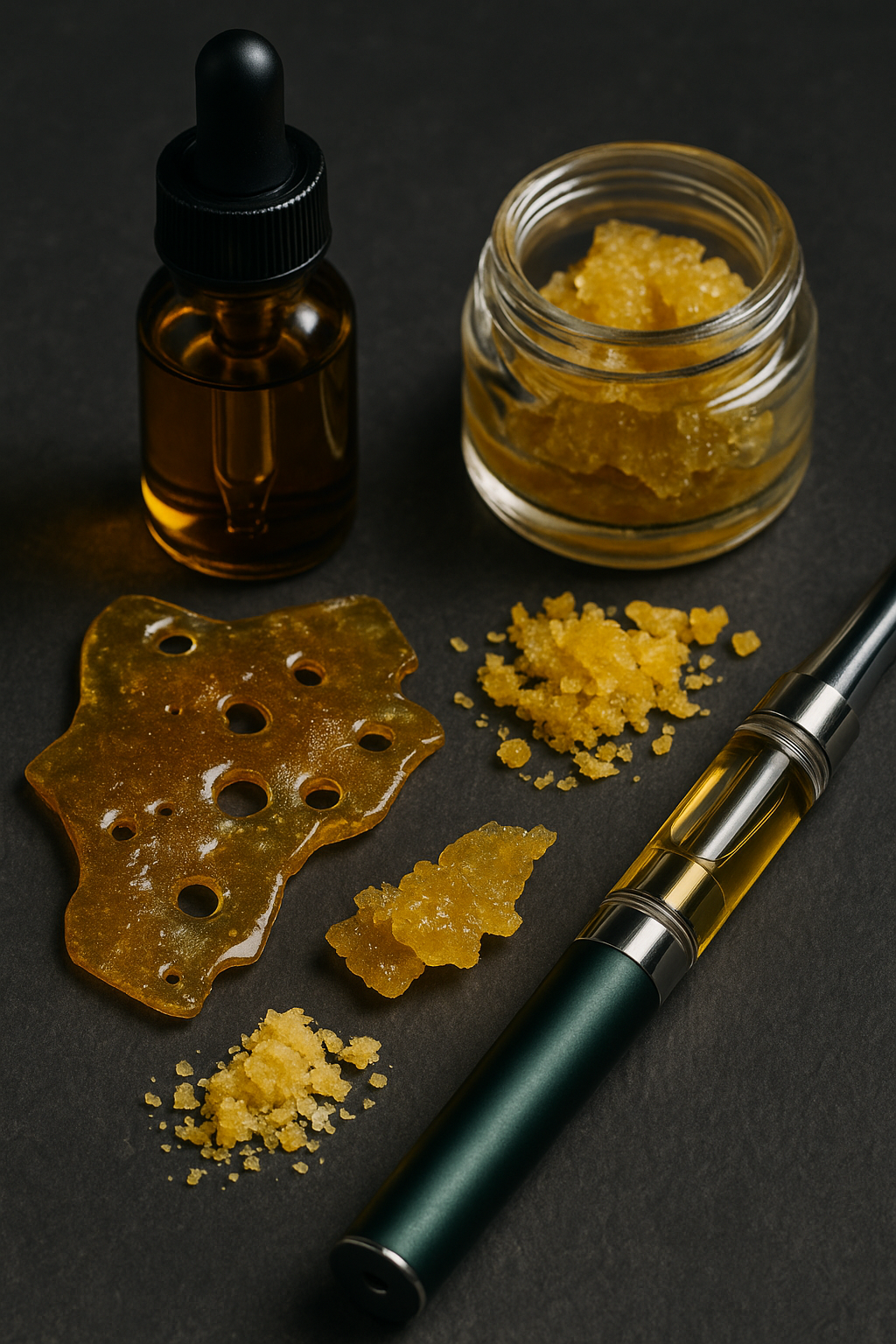
- Comparing Types and Potency
Type of Concentrate | Extraction Method | Texture & Appearance | Average THC Range |
Shatter | Solvent-based (BHO) | Brittle, glassy sheet | 70–90% |
Wax/Budder | Solvent-based | Soft, whipped texture | 60–80% |
Rosin | Solventless (heat & pressure) | Sticky, golden sap | 50–75% |
Live Resin | Fresh frozen, solvent extraction | Wet, terpene-rich | 65–90% |
Hash & Kief | Solventless (sieved trichomes) | Powdery or pressed | 40–60% |
- Best Use Techniques
Cannabis concentrate consumption is a delicate balance between tradition and technology — ritual and device. The best way to consume each type of concentrate is through a specific method.
- Dabbing: Vaporizing cannabis concentrates quickly using a rig or an electronic nail for maximum potency.
- Vape Cartridges: Convenient, discreet and easy to use — for those who want to control and be comfortable.
- Infusion: Small quantities of wax, resin, or oil added to flower increases intensity and lengthens the effects of the flower.
- Edibles and Tinctures: A decarboxylated cannabis concentrate blended with an oil or butter is perfect for experimenting with food.
No matter if you’re looking for vapor, flavor or stealth — the cannabis concentrate you use will determine your experience.
- Why Potency Matters — And When Less May Be Better
Many cannabis concentrates may contain up to 5x more THC than an average flower. This high potency provides greater euphoric experiences, however it also deserves respect. New consumers should be cautious when using high potency concentrates and start with extremely small “rice grain” doses and gradually increase them as they develop tolerance and comfort.
Potency isn’t just about consuming more THC — it changes the character of the high — making it more intense, more immersive and often shorter lived. Cannabis concentration is not about how much you consume, it’s about calibration — precision over excess.
- The Art and Chemistry of Concentration
At the end of the day, cannabis concentrates represent the marriage of art and chemistry — a distillation of thousands of years of cultivating plants into one shimmering drop. Concentrates show us that refinement is not a diminishment of nature, but rather a magnification of it — and that the molecular poetry of the plant can be revealed by combining heat and human ingenuity with science.
In addition to being a guide to cannabis consumption — and a growing number of ways to enjoy cannabis — understanding cannabis concentrates is an invitation to see how science, heat and human curiosity can transform a flower into gold. Discover more about cannabis with Preston cannabis club blog.