
Why Do Cannabis Plants Turn Purple?

The Processes Behind Purple Coloration
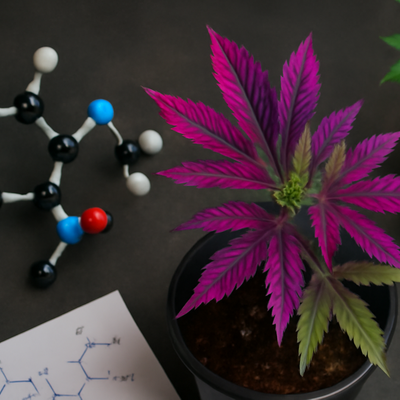
Purple pigment in cannabis comes from a compound known as anthocyanin, which is a water-soluble plant pigment belonging to the flavonoid family. These plant pigments create purple, red, and blue colors in a lot of plants, such as blueberries and red cabbage. When cannabis turns purple, anthocyanins will accumulate in the plant’s tissue and the result is the purple coloration that makes some strains visually unique.
Genetics
The actual ability to produce meaningful amounts of anthocyanins is dependent predominantly on the plant’s genetic traits. Varieties that have developed from other purple varieties, such as Purple Haze, Granddaddy Purple, or Purple Kush, have the genetic traits that enable them to produce anthocyanins (if the right conditions and environmental cues are presented to the plant). Other cannabis plants do not have these specific genetic markers and will not turn purple regardless of environmental factors.
Cooler temperatures are the most well-known environmental triggers that prompt the plant to produce anthocyanins. When temperatures at night drop beneath 15°C (59°F) during the flowering stage of a cannabis plant, more anthocyanins may be produced if the strain contains the genetic capability to produce anthocyanins. The temperature drop at night can cause the plant to form anthocyanins once it realizes it will not be able to continue growing in the summer and must prepare for winter dormancy.
Soil pH directly affects the development and expression of anthocyanins and the intensity of purple color produced by anthocyanins. If the soil pH is more acidic (i.e.,between pH 5.5 and 6.5) anthocyanins have been known to produce more vibrant blue and red colors. The same studies demonstrated that more alkaline conditions caused the colors to progress toward blue and purple. Soil phosphorus deficiency can cause purple coloration, but if this occurs, the unexpected purple coloration in the plants indicates stress, not proper production of anthocyanins.
The rate at which and the spectrum of the light plants are exposed to will influence when Cannabis Turn Purple. Plants grown under stimulant UV light produce even more powerful purple coloration, as they are under some type of stress, and the anthocyanins are protecting the plant from damage. Too much light can negatively impact a plant’s health, so the level of light needs to be kept under control to achieve the best results for purple cannabis.
Typically, purple coloration will emerge during the later stages of flowering; usually during the last 2 to 3 weeks before harvest. Transformation typically starts at the fan leaves and will eventually move into the sugar leaves, and in some plants eventually into the buds (although this can be rare).
Anthocyanins do not produce cannabis with a stronger potency, nor do they produce high-quality cannabis. Anthocyanins can help add complexity to the flavor profiles which might even add berry or grape like notes to the taste, but THC and CBD potency depend on a strain’s genetic developments and the growing conditions, primarily the growing conditions and not the color. The intrinsic value of purple cannabis typically adds a perceived value to the products because consumers can see the purple color(s), but the cannabinoids administered by the cannabis product are what primarily dictate their effects or experience.