
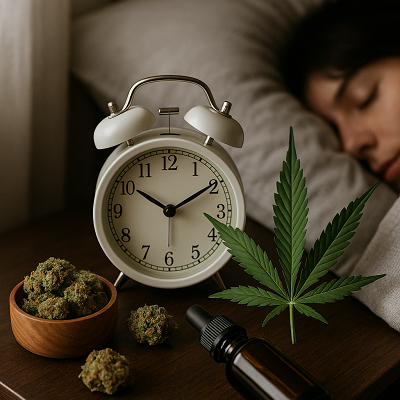
The Rising Difficulty of Insomnia
Sleep disorders impact millions across the UK, leading to billions in lost productivity and health costs. Sleep-tracking gadgets show how poor our sleep would have been without sleeping pills. And while sleep medicines come in many forms, such as benzodiazepines or atypical sedatives, they all tend to have unwanted and often dangerous side effects like dependency, daytime grogginess, and cognitive impairment.

Cannabis and Sleep Research
Cannabis is one of these potential remedies that sound promising. Recent studies have examined the effect of cannabis on sleep, the sleep-related effects of cannabinoids, and the neurobiological factors involved in the relationship between cannabinoids and sleep. Cannabis can interact with the endocannabinoid system, which regulates sleep cycles. Different cannabinoids play different roles in sleep.
- THC has been shown to reduce sleep onset latency aiding in sleep onset and severity.
- CBD has been shown to relieve anxiety and stress, which are common contributors to insomnia and are often reduced with the use of cannabis.
- CBN, another cannabinoid, has shown some mild sedative properties in small studies, but it is often associated with aged cannabis.
Cannabis-Related Patient Reported Outcomes
Cannabis can provide other benefits, such as:
- Improved ability to fall asleep, and reduced time spent awake at night.
- A reduction in chronic pain that interrupts sleep.
- Reduced frequency of nightmares in those with PTSD.
- Subjective reports of increased “restorative” sleep.
Risks and Considerations
However, there are also risks and contraindications to consider.
- THC, and higher dose THC, can impair REM sleep – which leads to less dream activity.
- Daily use of THC can create tolerance, leading to needing higher doses.
- Withdrawal from prolonged use can result in sleep disruption occurring for a short term.
Clinical and Practical Recommendations
Clinical or practical recommendations can include:
- Choose Indica-dominant strains, and take note of terpenes to aid relaxation, like myrcene or linalool.
- Experiment with edibles or tinctures before bed-1-2 hours before sleep would give longer lasting effects.
- Start with low doses to minimize daytime grogginess.
Combine good sleep hygiene with cannabis: sleep in a cool room, reduce screen exposure before sleep, and go to bed at the same time each night.
Cannabis is not the end-all solution to sleep problems, but it may provide an alternative to pharmaceutical sleep aids that is plant-based and safer. Further clinical research is warranted, but in the meantime, anecdotal evidence from patients strongly suggests that cannabis can improve sleep quality and wellness. On our website’s weed blog, you can find plenty of useful information about cannabis as well as the latest news from the ganja industry.